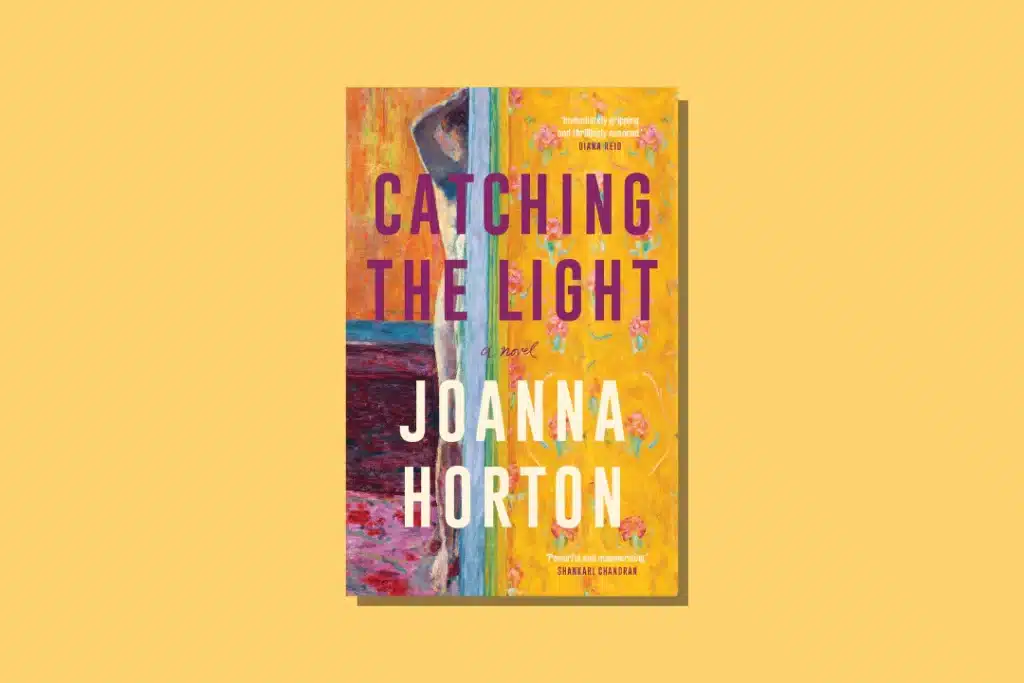
Catching the Light by Joanna Horton is a novel about a mother and daughter navigating their relationship, individual identities, the art world and wobbly boundaries of a bohemian cooperative model.
The story is told from two perspectives, the mother Sylvie and daughter Alice across two periods of time, when Alice was 15 and they were living at an artist’s commune lead by Michael called Isaiah in the countryside. The closest city is Dunedin, New Zealand. We toggle forward to when Alice is nearly 30 years old and she and Sylvie have settled in Melbourne, Australia.
On the Isaiah farm the group of creatives see themselves in rebellion from the mainstream being open to free love, shared work, arnica and tea for pain; but it doesn’t mean hierarchy and power dynamics fall away. It’s clear Michael is the leader. Isaiah is his property after-all and while there are drop-ins who’ve dropped out, it becomes apparent that some people, Sylvie included, join out of a desire to be with him.
There are many characters but two have important roles adjacent to our mother and daughter. Caroline is an aspiring arts writer (in the present day telling) who befriends Alice, we think digging for the dirt. She’s nouveau riche and the beneficiary of art-world nepotism at the NGV. Michael the artist is depicted with the fullness of his ego, sex drive, depression, and alcoholism. Michael makes sense when viewed through an art-world lens. Caroline however has a random back-story which doesn’t feel additive, the same can be said for the early life story of Sylvie. That being said, I applaud Horton’s effort to show that each individual and their behaviour, mistakes, world view, and ambitions have been informed by their experiences. That is real in this work of fiction.
The beginning of the book leads you towards an ominous feeling, a dangling carrot if you will, to turn the page. It feels weird to say that about a sense of foreboding but it’s clear we’re being primed that something is not right and we are going to witness a traumatic event associated with the trope of Michael, the 45 year old male artist and Alice the not yet 16 year old girl in the story.
Something does come about but not as we’d perhaps been assuming.
While I was glad it wasn’t the exact thing of my dark imaginings it also felt hard to suspend my disbelief. I’ve read that Horton didn’t want to paint the picture of a ‘typical villain’, so I guess this was an effort in that direction. I was glad that the turning point in the narrative was not exactly predictable but I felt unsure about the veracity of things panning out the way that they do. This is possibly an example of the author’s emphasis on presenting the complexity of people and multiple points of view. She shows that there is fact and subjective experience.
The back cover of the book reads “sometimes it’s all a matter of perspective” and this is a good umbrella phrase for what the novel is aiming for, to present ideas that are challenging and show a situation from a few sides, with no promise of resolve. Life experiences are layered.
There are a lot of themes covered in the novel, family estrangement, art, desire, power, the male gaze, female friendship, identity, and consent, to name but a few. All very interesting as stand-alone issues but with so much nuance it can at times feel like we’re packing too much into the suitcase, or mediums into the artist’s bag.
The mother daughter relationship is sometimes hard to reconcile. And yet, the notion of a child-like parent and child who has to parent or grow up too soon is real. Horton expresses the loneliness and self-consciousness of teenage-hood and young adult life well. The author also offers insight to the complexity of parental responsibility; of wanting an independent identity, being committed to motherhood, being frustrated and simultaneously proud and besotted.